


Monthly Archives: Juni 2022

Refleksi Kritis Pelanggaran Kode Etik Profesi Akuntan di Indonesia
Penulis:
Jami
Nabila Dwi Puspita Sari
Setiap profesi pelayanan publik perlu mendapakan kepercayaan dari masyarakat. Salah satu cara mencapai kepercayaan tersebut adalah dengan menerapkan standar mutu tinggi dan aturan oleh anggota profesinya. Profesi akuntan mempunyai aturan etika yaitu Aturan Standar Etika Profesional Akuntan Publik (SPAP) yang dikeluarkan oleh Kompartemen Akuntan Publik. Aturan tersebut menjadi pedoman wajib bagi segenap profesi akuntan di Indonesia.
Machfoedz (1997) mengatakan seorang yang berprofesi sebagai akuntan dapat dikatakan profesional ketika ia telah memenuhi tiga syarat, yaitu berkeahlian, berpengetahuan, dan berkarakter.
Menelaah kembali kasus pelanggaran kode etik profesi akuntan di Indonesia dapat memberikan gambaran bahwa profesi akuntan merupakan faktor yang sangat penting dalam kehidupan sosial yang ketika ia melakukan kesalahan, maka akan berdampak kepada kerugian kepada orang lain. Selain itu, membaca kembali kasus pelanggaran juga dapat dijadikan pelajaran bagi para penerus profesi akuntan agar tidak sekali-kali melakukan kecurangan atas pelayanan yang ia berikan.
Beberapa kasus berikut merupakan bukti dampak besar ketika profesi akuntan melanggar etik profesinya, salah satu kasus pelanggaran yang besar adalah sebagai berikut:
- Manipulasi Laporan Keuangan PT KAI
Transparansi serta kejujuran dalam pengelolaan lembaga yang merupakan salah satu derivasi amanah reformasi ternyata belum sepenuhnya dilaksanakan oleh salah satu badan usaha milik negara, yakni PT Kereta Api Indonesia. Dalam laporan kinerja keuangan tahunan yang diterbitkannya pada tahun 2005, ia mengumumkan bahwa keuntungan sebesar Rp. 6,90 milyar telah diraihnya. Padahal, apabila dicermati, sebenarnya ia harus dinyatakan menderita kerugian sebesar Rp. 63 milyar.
Kerugian ini terjadi karena PT Kereta Api Indonesia telah tiga tahun tidak dapat menagih pajak pihak ketiga. Tetapi, dalam laporan keuangan itu, pajak pihak ketiga dinyatakan sebagai pendapatan. Padahal, berdasarkan standar akuntansi keuangan, ia tidak dapat dikelompokkan dalam bentuk pendapatan atau asset. Dengan demikian, kekeliruan dalam pencatatan transaksi atau perubahan keuangan telah terjadi di sini.
- Kasus Lippo
Kasus Lippo bermula dari adanya tiga versi laporan keuangan yang ditemukan oleh Bapepam untuk periode 30 September 2002, yang masing-masing berbeda. Laporan yang berbeda itu, pertama, yang diberikan kepada publik atau diiklankan melalui media massa pada 28 November 2002. Kedua, laporan ke BEJ pada 27 Desember 2002, dan ketiga, laporan yang disampaikan akuntan publik, dalam hal ini kantor akuntan publik Prasetio, Sarwoko dan Sandjaja dengan auditor Ruchjat Kosasih dan disampaikan kepada manajemen Bank Lippo pada 6 Januari 2003.
Dari ketiga versi laporan keuangan tersebut yang benar-benar telah diaudit dan mencantumkan ”opini wajar tanpa pengecualian” adalah laporan yang disampaikan pada 6 Januari 2003. Dimana dalam laporan itu disampaikan adanya penurunan AYDA (agunan yang diambil alih) sebesar Rp 1,42 triliun, total aktiva Rp 22,8 triliun, rugi bersih sebesar Rp 1,273 triliun dan CAR sebesar 4,23 %. Untuk laporan keuangan yang diiklankan pada 28 November 2002 ternyata terdapat kelalaian manajemen dengan mencantumkan kata audit. Padahal laporan tersebut belum diaudit, dimana angka yang tercatat pada saat diiklankan adalah AYDA sebesar Rp 2,933 triliun, aktiva sebesar Rp 24,185 triliun, laba bersih tercatat Rp 98,77 miliar, dan CAR 24,77 %.
- Kasus Sembilan KAP yang diduga melakukan kolusi dengan kliennya
Kasus ini diawali dengan Indonesia Corruption Watch (ICW) meminta pihak kepolisian mengusut sembilan Kantor Akuntan Publik, yang berdasarkan laporan Badan Pengawas Keuangan dan Pembangunan (BPKP) yang diduga telah melakukan kolusi dengan pihak bank yang pernah diauditnya antara tahun 1995-1997. Berdasarkan temuan BPKP, sembilan dari sepuluh KAP yang melakukan audit terhadap sekitar 36 bank bermasalah ternyata tidak melakukan pemeriksaan sesuai dengan standar audit.
Hasil audit tersebut ternyata tidak sesuai dengan kenyataannya sehingga akibatnya mayoritas bank-bank yang diaudit tersebut termasuk di antara bank-bank yang dibekukan kegiatan usahanya oleh pemerintah sekitar tahun 1999. Kesembilan KAP tersebut adalah AI & R, HT & M, H & R, JM & R, PU & R, RY, S & S, SD & R, dan RBT & R. “Dengan kata lain, kesembilan KAP itu telah menyalahi etika profesi. Kemungkinan ada kolusi antara kantor akuntan publik dengan bank yang diperiksa untuk memoles laporannya sehingga memberikan laporan palsu.
Terjadinya kasus penyimpangan kode etik diatas hanya jumlah sedikit dari kasus lain yang yang akhirnya juga berdampak besar bagi sosial masyarakat menunjukkan bahwa penegakan kode etik akuntan di Indonesia masih rentan. Mencermati beberapa pelanggaran diatas, kita turut prihatin, mengingat bidang pekerjaan profesional sangat mengutamakan kepercayaan, public trust and public interest harus merupakan suatu yang sakral bagi praktisi akuntan Publik.
Fenomena-fenomena kasus suap yang terjadi pada auditor membuat independensi seorang auditor dipertanyakan kembali oleh masyarakat. Kasus pelanggaran sikap independensi memunculkan suatu paradigma di mana kasus suap memang tidak mampu dibaca oleh akuntan publik yang mengaudit laporan keuangan tersebut atau sebenarnya telah terbaca oleh auditor tersebut namun auditor tersebut sengaja memanipulasinya. Etika profesi yang dilanggar oleh auditor dapat menurunkan kualitas kinerja seorang auditor. Etika profesi merupakan faktor yang dapat mempengaruhi kinerja auditor. Guna meningkatkan kinerja auditor, maka auditor dituntut untuk selalu menjaga standar perilaku etis. Auditor yang mampu menjalankan etika profesinya dengan baik maka dia akan bekerja sesuai dengan nilai-nilai etika dan kode etik yang berlaku sehingga auditor dapat meningkatkan kinerjanya dan mendapatkan kepercayaan dari masyarakat. Etika profesi adalah nilai-nilai tingkah laku yang diterima dan digunakan oleh organisasi profesi akuntan yang meliputi kepribadian, kecakapan professional, tanggung jawab, pelaksanaan kode etik dan penafsiran dan penyempurnaan kode etik.
Profesi akuntan sering dihadapkan pada dilema etis dari setiap jasa yang ditawarkan. Situasi konflik dapat terjadi ketika seorang akuntan publik harus membuat profesional judgement dengan mempertimbangkan sudut pandang moral. Situasi konflik atau dilema etis merupakan tantangan bagi profesi akuntan publik. Untuk itu mutlak diperlukan kesadaran etis yang tinggi, yang menunjang sikap dan perilaku etis akuntan publik dalam menghadapi situasi konflik tersebut. Terdapat banyak faktor (baik faktor eksternal maupun internal) yang mempengaruhi sikap dan perilaku etis Akuntan Publik.
Referensi:
Keraf. A., S., 1998, Etika Bisnis, Tuntutan dan Relevansinya, Penerbit Kanisius. Yogyakarta
Mulyadi, 2002,Auditing, Edisi 6,Salemba Empat, Jakarta.
Matondang, Zulaika. "Etika Profesi Akuntansi dalam Perspektif Islam." Al-Masharif: Jurnal Ilmu Ekonomi dan Keislaman 3, no. 2 (2015): 55-68.
Sihotang, K. 2019. Etika Profesi Akuntansi: Teori dan Kasus. PT Kanisius. Yogyakarta
Budiman, Septian Arief. "Analisis Etika Profesi Akuntansi Perspektif Al-Quran." Jurnal Ilmiah Akuntansi Universitas Pamulang 6, no. 1 (2018): 68-81.
Rinaldy, Syiar, Asbi Amin, and Aisyah Shalsabila. "Prinsip Etika Profesi Akuntan: Persepsi Mahasiswa." Bongaya Journal for Research in Accounting (BJRA) 3, no. 2 (2020): 106-114.
Napisah, Napisah, Desi Jelanti, Meta Nursita, Khusnul Khuluqi, and Nugroho Widhi Pratomo. "Etika Profesi Akuntansi Problematika di Era Kompetitif." Pro Bono Jurnal Pengabdian Kepada Masyarakat 1, no. 01 (2021).
Mafazah, Putri. "Etika Profesi Akuntansi Problematika di Era Masa Kini." SIBATIK JOURNAL: Jurnal Ilmiah Bidang Sosial, Ekonomi, Budaya, Teknologi, dan Pendidikan 1, no. 7 (2022): 1207-1212.


The Crisis of Populism: Sentiment and Persecution in Common
The recent global issue has been arousing political tension and emerged the Muslim outrage about the Indian ruling party spokeswomen’s case of defamation. The defamation subject is the derogation of the prophet Muhammad's marriage. I going to stress that what Nupur Sharma said in her public performance not only reflect their thought but more significantly the internal dynamic of the ruling party's foundational ideology. It needs further elaboration from the global political perspective to conceive a better understanding. And I try to make sense of the Muslim countries’ response to this issue.
The current stage of global political development shows a democratic recession. This seems obvious when we read the index of democracy in the last past decade. Political scholars and observers from different schools of thought then discuss and conclude that the main cause of this issue is the rise of populism. Why is this political style dangerous? One eligible reason is that this political style tends to promote strong leaders supported by alerting rhetoric and conservative political platform.
The emergence of strong political leaders such as Xi Jinping, Donald Trump and Narendra Mody is a vibrant sign of populism. A strong leader necessarily needs historico-cultural narration to make their political claim legitimate. While Xi Jinping summoned the great narration of China's empire to legitimate and centralize his political power, Donald Trump calls up America the great nation to be her political narration to win the election. Thus, Narendra Mody establishes narrations of the Hindu country as the political instrument to hold power in India. As a strategy of political contestation, this political style is very effective because intensifies the religio-cultural sentiment of the majority of people. But the side effect is clearly lethal.
In the countries led by populist leaders, the right of the minority is limited or cut down indeed. They also being the object of discrimination and persecution. This happens mostly because of the populist leader’s alarmist rhetoric. It became a modus to gain support from the majority of the population. In order to strengthen alarmist narration, populist parties tend to spread out a kind of imagined enemies, threats or dangerous situations that often attach to the minority. This is obvious in the case of India’s populism since BJP come as the ruling party. So, we are not surprised when the conflicts and tensions triggered by the religious issue are more frequent.
I suppose this kind of majoritarian politics promoted by populist parties thus urges people to construct an oppositional mental model. This can be called the hidden ideology of politico-cultural supremacists. The important fact is that supremacist ideology tends to monopolize the public discourse according to what they perceive and think appropriate and valuable. The case of BJP spokeswomen’s defamations can be said to reflect this ideology. One probable reason is that the public performance of the party planned to evaluate the reputation of the sacral figure believed by the Muslim minority in India. Maybe Nupur Sharma has a similar stance to the feminist critics, but she has no moral ground to say it because she is part of the ruling party.
What makes me more intrigued by this case is the Muslim response. I agree with Ahmet T Kuru when he pointed out that the Muslim countries, especially with authoritarian characters and strong Islamist supporters, have more profound religious foundational sentiment. Unfortunately, when the persecution and the abuse of human rights toward Muslim minorities within and in the foreign territory they seem to have not a powerful voice to protest or give advocacy. I think it is the huge problem in our Muslim world today.
The world's Muslim solidarity is a virtuous political vision. Until now, this solidarity only operates in passive (or defensive) manners especially when Islam as a historical normative narration is damaged. Therefore, the case of blasphemy, heresy and defamation is being sensitive within the Muslim world. These normative guardian preferences do not operate in a vacuum. It undoubtedly has a historical trajectory in that mode of circulation. I believe that the Islamist movement—beginning with the Islamic reformation and then strengthening with the Islamic resurgence— is the historical cause of the dominant circulation of normative preferences.
Maybe, someone argues that Islamist political platform is also a form of populism based on the narration of religion. It is undoubtedly correct because the Islamist political platform going to establish the culture of normative traditions called sharia. But this political aspiration has a fundamental problem when accepting orthodox discourses and tends to eliminate the heterodox religious interpretations. In the other world, the Islamist movement cannot tolerate the diversity of Islamic experiences. This is the main reason they persecute the minority because they practice Islam differently from the majority. From our short discussion above, I must assert that populism based on cultural-religious narrations constructs the solidarity of the majority people (with dominant traditions) to hold power and always sacrifice the other to maintain their exclusive visions.
Baca Selengkapnya
Crafting Stories in Modern Times
Everybody has their own story. All people knew it. But what makes a story more interesting than the other stories is because its covey values that we expect to enrich our lives. Story is a kind of imaginary world that we shape with language for living in human interactions. Sometimes, it has powerful narrations that persuade people to conduct in a certain kind of direction. Therefore, story is an essential element of human culture.
Maybe, someone tends to define story as the objective dimension of human experience. It is accurate as far as the story is shared human experiences. Our natural conditions necessarily need a story to identify and construct ourselves for living with others. So, as Max Weber famously put it, “man is an animal suspended in webs of significance he himself has spun,” the story is a form of significance. In other words, what made the story possible is the meaning of life itself. And it is transferred from one person to another and transmitted across generations through collective memory and historical accounts.
From such abstraction, we need to pin it down to conceive a better understanding. I would begin with my last weekend's story about modern popular culture called cinema. In my developing countries, cinema movies are popular entertainment that attracts most middle-class people. They enthusiastically follow the film story as a sign to be modern. It is also the way to appropriate modern cultures. For this reason, the cinema theatre is the main site of reproducing modern imaginations and disseminating its values through fascinating narrations. When I was there, I attempt to reflect on the position and mechanism of the movie within modern cultures.
From the consumer perspective, the cinema theatre service is clearly making people comfortable. The room is full AC, and the movie theatre is a good effects setting. But this service must be paid with the amount of money that not everybody is able to afford it. The cost of one cinema ticket is $5. This amount is the average daily living cost in my city. This year, my city’s minimum standard wage is around $ 150 a month. When we divide it by 30 (day), the labour class just take $ 5 per day. So, the labour class hardly prefers to watch a movie in the cinema theatre and tends to spend their money on more affordable or costless entertainment.
What makes this popular culture inaccessible to the lower class is the logic of capitalism. This logic operates when we perceive the population of society as potential consumers to build the market. The capitalist mode of cinema making tends to produce films or movies with a massive budget to achieve some degree of qualities that are expected to gain attention in the market. For them, movies must be costly produced in order to craft the narration of the story with special features and effects that provide new experiences for the audiences. This is why the genre of movie films varies from romance, drama, action, and horror to science fiction.
I must point out that all these genres lie from imagining contextual human experiences. But as a cultural product with market logic, the film story must be distributed with a restrictive mechanism (ticketing) to gain revenue. And the cinema theatre's main function is to maintain this mechanism. So, when the modern stories are intertwined with the market logic the consequence is cultural products tend to be functioning as distinctive identities. This mode of distinction is conducted not only by the well-off people but also by the poor ones. For instance, poor people can consume the costly modern popular culture through alternative channels. Thanks to the ICT revolution, the alternative movie channel is flourishing widely and costless distributing. This account can be called the popular cinematic story in the modernized city.
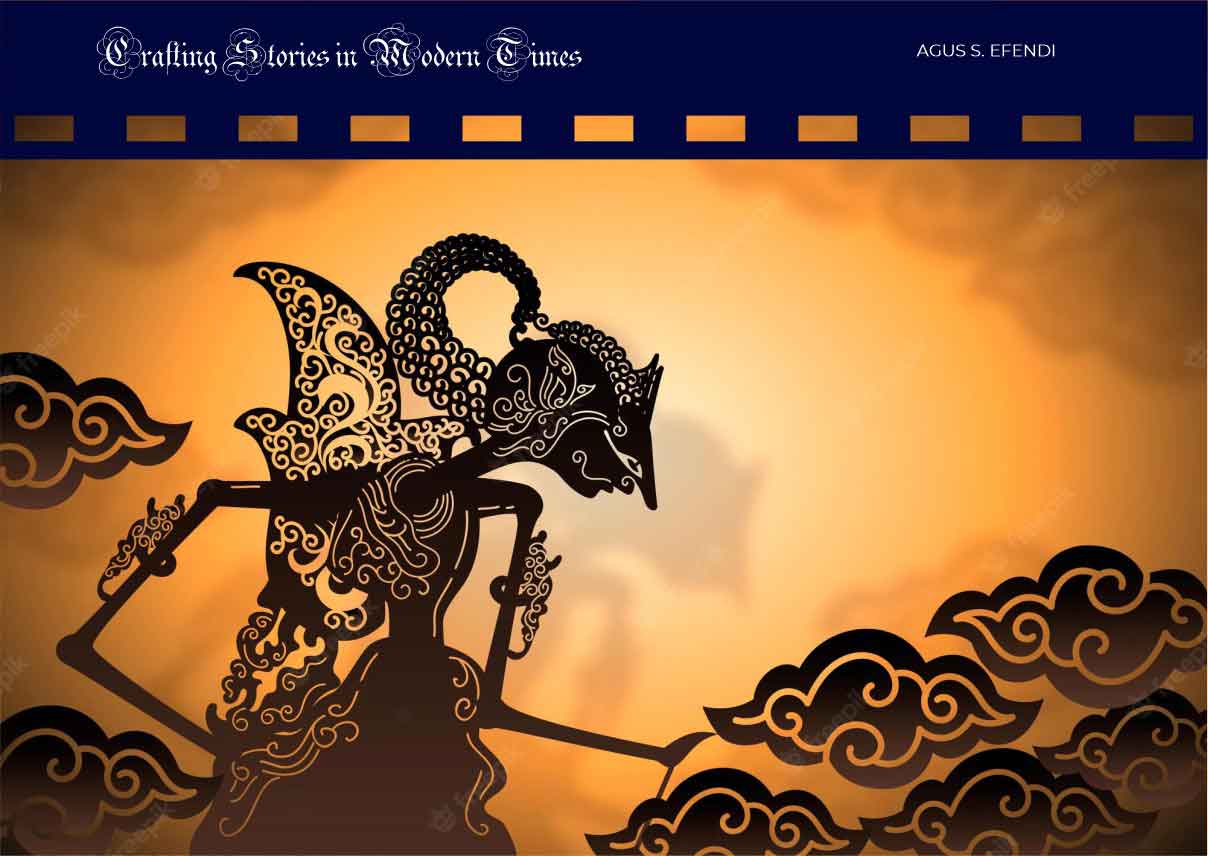
Despite modern culture being dominant, I found the resilience of traditional popular stories. This resilience seems clear when I attend to pagelaran wayang (shadow puppet show) a few days ago. When I was a child, I perceived that the wayang performance is often held by the traditional public figures who are well known as wealthier people. And wayang is a popular culture show among Javanese people. The popularity of wayang comes from the well-established moralistic narrations performed by the dalang (shadow puppet master). Besides that, wayang as a public show has a deep root in the history of Javanese cultures.
What makes me feel amazed when attending wayang showsis the skill mastery of dalang. A dalang necessarily knows the stories of Mahabarata and Ramayana and is sufficiently mindful of the biography of its characters. Because of pagelaran wayang is the performative show, dalang must mastering the motions of wayang (puppet). And more interestingly, dalang is also able to make different voices regarding the character of wayang. However, shadow puppet shows—performed one full night in length—have thematic wayang stories. This thematic story is regularly chosen according to the celebrating events. It can be a wedding, public promotion or anniversary.
Attending pagelaran wayang in the rural setting get me think that one of its key functions is to maintain social cohesion. It seems obvious to me when this show originally is presented to people who live in the rural community. I observe two different clusters of audience. The first one is the audiences who have a connection—it can be bold or work ties— or influence in the rural community. All of them are the preferentially targeted audience. And the second is the public audience who live in the rural community or have curiosity about wayang. The two clusters of the audience are not divided strictly, they can sit down wherever they feel comfortable and appropriate. But the first one has a different treatment because they are invited.
I suppose the narration of wayang stories carries essential values for human living. For instance, the story of “pandu swargo”— the title of pagelaran wayang I have been attended—can be interpreted as the value of respecting the old people. This title is chosen to remind us (the audience) that people who are born later must respect their parents. I must recognize that I hardly understood the flow of the wayang story because the show was narrated in high strata of the Javanese language. I am not familiar with it. But I try to make sense of it as far as I can.
One last thing we must consider in pagelaran wayang is the role of women singers (pesinden). Pesinden has a beautiful voice to sing Javanese lyrics (tembang). Their vocal ability is unique because possess a highly controlling level and sometimes are energic. Unfortunately, this aesthetic part in wayang is difficult to grasp the meaning. Concerning this phenomenon, I must assert that this is a clear sign that Javanese culture accommodates women's role in public. By such a short comparison, modern times certainly possess their own popular culture as the story of distinctive identity. But when we travel in the periphery, the popular tradition still exists with its own value; namely the story of collective and inclusive solidarity.
Baca Selengkapnya

Deklarasi Calon Korpus BEM Nusantara, Alhuzaify Komitmen Perjuangkan Hak Rakyat
Yogyakarta, Pewartanusantara.com – Presiden Mahasiswa UIN Sunan Kalijaga, Syaidurrahman Alhuzaify mendeklarasikan diri untuk maju menjadi calon Koordinator Pusat (Korpus) Badan Eksekutif Mahasiswa (BEM) Nusantara.
Deklarasi pencalonan tersebut disampaikan Alhuzaify diselah-selah acara Temu Nasional BEM Nusantara yang dihadiri ratusan mahasiswa dari ratusan kampus di seluruh Indonesia yang telah terlaksana di UIN Sunan Kalijaga Yogyakarta sejak Senin 06 Juni 2022.
“BEM Nusantara merupakan wadah bertukar pikiran dan gagasan kritis mahasiswa. Sejak terbentuk pada tahun 2005 di UIN Sunan Kalijaga Yogyakarta. BEM Nusantara hendaknya selalu teguh dengan komitmen awal terbentuk untuk menjadi gerakan alternatif dan mengawal setiap kebijakan yang harus memiliki keberpihakan kepada rakyat Indonesia,” tutur Ahuzaify kepada Beritabaru.co, Selasa (07/6/2022).
Ia menegaskan akan mengakomodir berbagai macam macam ide, pandangan, dan juga pendapat dari berbagai pihak agar ke depan dapat menghasilkan pikiran-pikiran progresif ketika mengkaji sebuah persoalan.
“Agaknya hal tersebut menjadi suatu keniscayaan dinamika pemikiran, bukan sebaliknya malah menjadi celah yang bisa dimanfaatkan oknum tertentu untuk memecah fokus gerakan. Tentu sudah menjadi keharusan untuk selalu merefleksikan arah gerak BEM Nusantara dari masa ke masa, sehingga tetap selalu berada pada semangat yang pada awalnya menjadi alternatif gerakan BEM yang ada di bumi Nusantara ini,” tegasnnya.
Melalui Temu Nasional ke 13 ini, lanjut Alhuzaify kita bersama-sama kembalikan BEM Nusantara pada ruh awal dan merefleksikan ulang perjalanan BEM Nusantara dengan satu tujuan bersama.
Alhuzaify juga menegaskan pihaknya secara konsisten akan menjadikan BEM Nusantara sebagai garda terdepan dalam memperjuangkan hak-hak rakyat.
“Sebagai mahasiswa sudah sepatutnya tidak membuat jarak dengan masyarakat, dengan begitu jika nantinya terpilih menjadi Korpus BEM Nusantara, saya secara konsisten akan menjadikan organisasi mahasiswa ini sebagai wadah bergerak dan berjuang bagi seluruh mahasiswa dalam memperjuangkan hak-hak rakyat,” ujar aktivis PMII UIN Sunan Kalijaga tersebut.
Alhuzaify berharap ke depan BEM Nusantara akan menjadi rumah bersama bagi seluruh mahasiswa Indonesia dengan terus meningkatkan daya saing global serta tetap progresif dan inovatif dalam menyuarakan keadilan bagi masyarakat.
“Indonesia sebagai negara yang besar harus diisi oleh para penerus bangsa yang mempunyai pemikiran yang besar juga. Pemikiran yang besar tersebut lahir dari pendidikan yang berkualitas, oleh karena itu perbaikan evaluasi dan refleksi terhadap kebijakan bidang pendidikan juga akan menjadi fokus saya ke depan,” tegasnya.
Diketahui, BEM Nusantara menggelar kegiatan temu nasional ke-XIII, di UIN Sunan Kalijaga Yogyakarta. Kegiatan yang berlangsung Senin (6/6) itu dihadiri oleh ratusan mahasiswa dari berbagai universitas di Indonesia.
Kegiatan tersebut mengusung tema 'BEM Nusantara Sebagai Inkubasi Pemimpin Bangsa yang Ideal Berlandaskan Nilai Pancasila Guna Menjawab Tantangan Era Society 5.0'.
Acara tersebut dihadiri Kepala Badan Pembinaan Ideologi Pancasila (BPIP) Yudian Wahyudi, Kepala Badan Intelijen dan Keamanan (Kabaharkam) Polri Komjen Pol Ahmad Dofiri, serta Koordinator Pusat BEM Nusantara, Dimas Prayoga.
Baca Selengkapnya
‘Mosques’ Cultures under Market Logic: A Critique
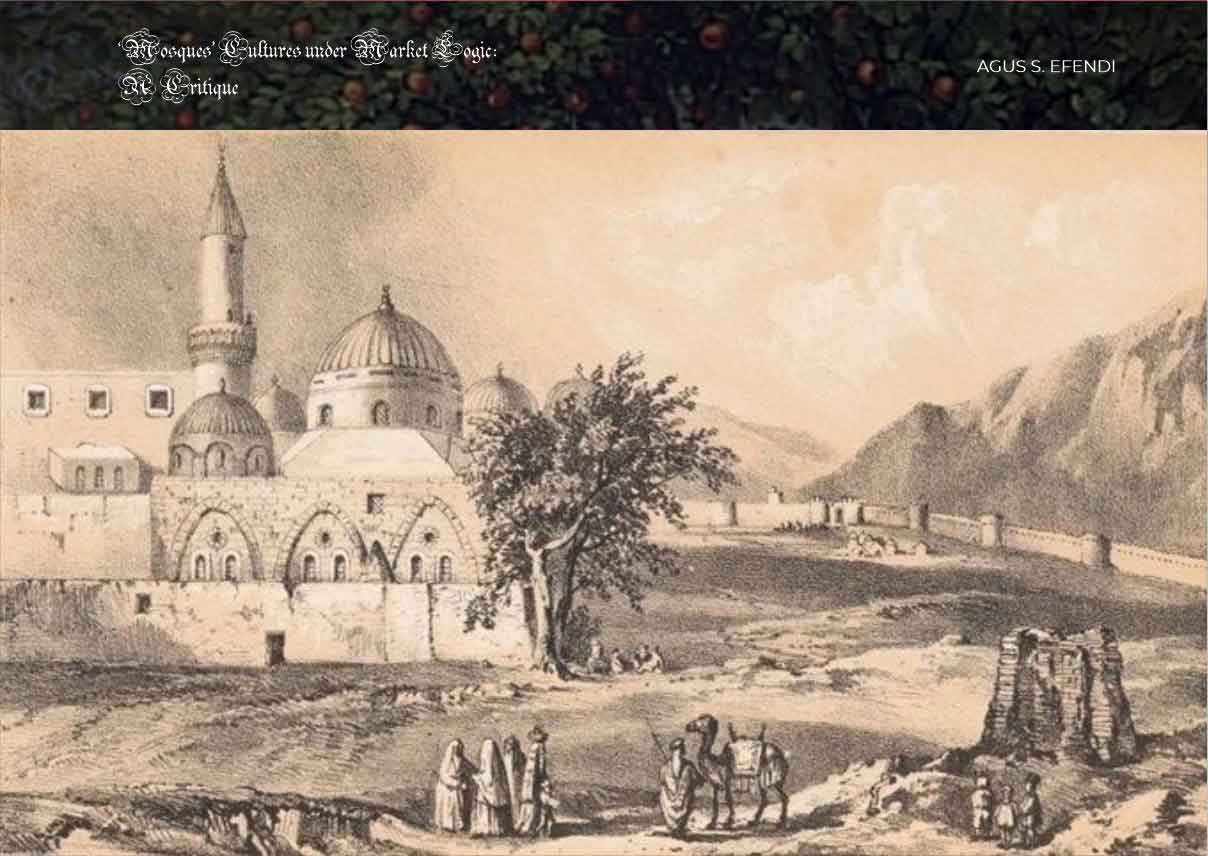
As the main site of religious practices, mosque is perceived to be the heart of cultivating Muslim community. At the beginning of Islam, precisely in the Madinah periods, this site has social functions for instance building solidarity, making social cohesion, and solving public problems.
These functions thus made mosques to be an institution that educates the community with egalitarian values and inclusive participation. From this point, we can understand that the da’wa of Islam is not mere spreading normative values but also how to handle a wide range of social problems. And more interestingly the mosque is frequently used to be the site of musyawara (public discussion). In there, the Muslim community and the broad range of social unit called umatan wahida—according to the Madinah treaty, this social unit is plural in character because comprise cross religions and cross ethnics bounds— establish public spheres.
Baca Selengkapnya

Creating the Common Enemy of Religion
The contemporary world comes to our consciousness with a burden of problems. These problems sometimes brought a certain kind of conflict. For instance: conflict of interests, conflict of differences, conflict of power and more importantly conflict of legitimate visions. Why is this happening? Maybe we can’t get a convincing answer. But at least in my opinion that is always there because human being lives in two worlds, the mental world and the material world—subjective experiences and social conditions.
This seems obvious when we trace the past to identify our cultural infrastructures—as a tool to understand ourselves and the environmental conditions within historical continuity, for example, language and technique. With it, we enable to learn how our ancestors threatened the problems and what their insightful inventions are.
I suppose the emergence of ‘religion’ as a set of belief prepositions is a magnificent invention in human history. Whatever how we formulate to understand it, the spirit of religion tends to drive humans to acknowledge the limitations of their existential power and the only way to surpass it is to subsume the self into supernatural power. We can call it the first archetype of ‘religion’ in human history. And obviously, it necessarily grows and developed to be the cornerstone of human life while the interactions become complex.
There is an important thing to say that human civilization necessarily has a more systematic ‘religion.’ But historical narration tells us that civilization built upon centralized authority succeed monopolize the power (this can be military army or symbolic legitimacy) to make people comply. They hold the power tend to personalize themselves as a god or have god-like capacity. It is very effective to integrate and coordinate people in certain ways of conduct. However, while the kings or emperors ignore or sacrifice the live conditions of their people to shake their ambitions, it is absolutely the enemy of the human being.
I think religion as a counter narration has the ultimate role to evaluate the destructive tendency of human beings in history. The current world religions in their formative periods try to capture this evil tendency with the term or concept ‘satan’. This is obvious when we read how religious narrations draw the exegesis of the human being.

Adam was created by God from earth soil in the transcendental world called heaven. In there, Adam was accompanied by Eve. And the only prohibition is to eat the forbidden fruit. Once upon a time, satan enter heaven to sway Adam and Eve. Satan say “why you two did not eat the forbidden fruit? It is delightful fruit in the whole heaven. Do you think God does not have mercy while you misconducted? Because Adam and Eve conceive that God has mercy, thus, they eat the fruit. Afterwards, God speak to them. “you broke My rule in heaven, and the consequence is you must live dawn on the earth.” Since that time, Satan hasalways tried to deceive Ada’s descendants.
That story—despite the Biblical or Quranic version—gives us the matter of deception inherently within human existence. Therefore, prophetic revelation insists that satan is the common enemy to live in this world and return to the transcendental world. But what the satan is? According to the Quranic verse, satan is something that deludes our mental states to praise the living creatures as well as psychologically or intentionally. This means that one of the fundamental religious visions is to humanize human beings. But to maintain humanization religion provide transcendental narrations that all human being is equal.
While that narration infiltrates particular human cultures the principle becomes faint. It is the manifestation stage of the humanization visions of religion. Sure, this is a complex process and depends on the social and cultural infrastructure within it. However, the concept of satan, evil and bad thus still being interpreted as the main element of moral foundation accepted within a certain socio-cultural unit. This moral foundation thus enables people to behave as stable as possible to manage the chaotic effects of their conduct within society. My point is while we live in the fast-changing world one of the main tasks is to create a common enemy for human beings. Clearly, this is the enemy of humanism. Nowadays, we must be aware of the political movement under the banner of religion. They advocate religious supremacy but unfortunately, they seem to ignore the humanistic principles. The true enemy of religion is not something in external reality but the mental attitude that being deceived with the hate of human existences. It is the satanic personality that justifies conflictual reality in our times.
Read also: Making Political Myths: The Fate of Democracy in the Age of Information
Baca Selengkapnya